2009 trinidad+tobago (TTFF) Film Festival
Course ID: International Film Studies: Dr. Calli Jenks
This website has been restored and archived as required reading for Dr. Jenks' course focused on global film production. Jenks is the school's authority on advocacy using documentary film as the vehicle for change. Her current project is in conjunction with the group Regulate Google Now! in an effort to draw attention to the excessive and unaccountable power vested in the search giant. Specifically targeting the harm caused by search results that reveal inappropriate and/or private information. She has first hand experience with this issue. A search for her mother's name revealed a shoplifting arrest that occurred 15 years ago, not mentioning the fact that she was acquitted and her record expunged. Yet the news item continued to be present on page 1 of Google's search results, leading school administrators to believe she was unqualified to teach children. This is a huge problem for many innocent parties who have no ability to force Google to remove these kinds of abusive results. The project uses student volunteers to research and document other examples in hopes of influencing legislation to force Google to provide avenues through which individuals can petition Google to remove unwanted search results. The film will be distributed via YouTube and other streaming services.
For several years this was the official website of the trinidad+tobago (TTFF) film festival, a cutting-edge film festival that continues to this very day to evolve and expand in celebrating expression and empowerment through film.
The first Trinidad and Tobago film festival took place in 2006. In 2007 the Festival expanded to its current length, and included, for the first time, screenings outside of Port of Spain, including Tobago. 2009 saw the inclusion of jury prizes.
Content is from the site's 2009 archived page.
The current website for the trinidad+tobago film festival is found at: https://ttfilmfestival.com/
The trinidad+tobago (TTFF) film festival seeks to highlight excellence in filmmaking through the exhibition of films made in the Caribbean region (including Latin American countries in the Caribbean Basin), by Caribbean people of the Diaspora, and by international filmmakers whose films are relevant to a Caribbean audience. The ttff is a cutting-edge film festival that continues to evolve and expand in celebrating expression and empowerment through film. Along with our film programme, the ttff, through a series of workshops and events, is emerging as the premier film festival of the Caribbean.
submissions
The festival accepts films made by Caribbean people, by persons of the Caribbean Diaspora and by international filmmakers who have made films that reflect Caribbean culture and the way of life both in the Caribbean and the Caribbean Diaspora.
In addition, our submission criteria also includes films from Central and South American countries that border the Caribbean sea.
The festival will screen films in 35mm, NTSC DigiBeta or NTSC MiniDV formats. Entries of various lengths will be accepted. All initial submissions should be in NTSC DVD and must be in English or with English subtitles.
There is no submission fee.
The deadline for the submissions is 30th May 2010.
All submissions must be accompanied by:
- Synopsis
- Running time
- Year of production
- Country of origin
- Language and if subtitled
- Genre
- Producer, director and cast if appropriate
- Short biography of director
- Festivals/awards (if any)
- Contact information
Submitted materials will not be returned, and only successful applicants will be notified. Please send direct inquiries to [email protected].
Visit Trinidad and Tobago Film Festival, in order to submit online.
Please submit your entries to:
Annabelle Alcazar
Programme Director
trinidad + tobago film festival
199 Belmont Circular Road
Belmont, Port of Spain
TRINIDAD & TOBAGO
ttff reserves the right to determine the eligibility of the submissions to be screened at the festival, appropriate time slots and to use excerpts of the films for publicity purposes. All films submitted must have applicable clearances and the ttff will not be held liable.
awards
2 jury prize awards
The National Gas Company Award
Best Film
trinidad+tobago film festival 09
This Award recognizes outstanding achievement in creating a feature film that reflects the Caribbean spirit. The winner receives a cash prize of $10,000US and an award.
The Trinidad and Tobago Film Company
Best Locally Made Film
trinidad+tobago film festival 09
This Award recognizes outstanding achievement by a filmmaker resident and working in Trinidad and Tobago. The winner receives a cash prize of $30,000TT and an award.
3 people’s choice awards
Best Dramatic Feature sponsored by Intercommercial Bank Limited. $5,000TT prize
Best Documentary Feature sponsored by Trinidad Systems Limited. $5,000TT prize
Best Short Film sponsored by Agostini Insurance Brokers Limited. $5,000TT prize
receptions
Opening Film, Reception and After Party
Tuesday, 15 September
Limited tickets available for sale
Rain
When Rain’s beloved grandmother dies she is forced to trade her simple but happy life on Ragged Island for the uncertainties of living in the capital with her mother, Glory, who abandoned her while a baby. Home becomes a two-room Nassau shack and Glory proves unfit for parental duties, being a drug addict, a prostitute, and quite possibly HIV positive. Rain seems destined for a bleak future, but for one thing: she is a promising sprinter. Her school’s track teacher, Trinidadian Ms. Adams, becomes coach and mother figure to Rain, who is determined, almost literally, to outrun her fate.
Shot in an unvarnished yet accomplished quasi-neorealist style, unsentimental yet humane in tone, and featuring a soulful pan-Caribbean music soundtrack (which includes Isaac Blackman’s “To the Ceiling”), Rain is one of the first indigenous feature films to come out of the Bahamas. It seeks to go beyond stereotypical and reductive notions of the region as simply either a postcard paradise or a cauldron of social and economic problems, instead taking a more nuanced, complex view of the realities of contemporary Caribbean life. In facing up to these realities, Rain is at times a dark and disturbing film, yet ultimately one of uplift and hope.
Awards: Audience Award, Bahamas International Film Festival 2008; Special Mention, New Voices, New Visions Award, Palm Springs International Film Festival 2008; Official Selection, Toronto International Film Festival 2008.
Queen of the Brands
Queen of the Brands is a short, sharp jab of anti-consumerist agitprop, brilliantly wrapped up in a seductive stylistic package. It features a brand-obsessed young woman, Ava, who is unable to find a pair of the latest fashionable sunglasses anywhere. Blinded by her desire to be trendy, she is duped into trying on a pair of shades by the film’s narrator. The result: Ava gets an unexpected head-trip of a lesson in the deleterious effects of naked materialism, the perils of thinking of nothing but bling.
Closing Film, Awards Ceremony and Reception
Tuesday, 29 September
Invitation Only
Carmen & Geoffrey
Filmed over three years in New York, Texas, Trinidad, and Paris, Carmen & Geoffrey is an affectionate and enamoring portrayal of dance icons Carmen de Lavallade and Geoffrey Holder, who met and wed in 1954. Ever since, Holder (from Trinidad) and de Lavallade (from New Orleans) have been dancers, actors and choreographers and much, much more, together and individually. Archival footage and candid interviews offer a glimpse into the remarkable lives of these two dancers, widely considered one of New York’s most beautiful and dynamic couples, who have excelled in one of the most notoriously challenging careers. Directed by Linda Atkinson & Nick Doob, 2005.
2009 venues, costs & packages
Wednesday-Tuesday, 16-29 September 2009
MovieTowne,
Lot D, MovieTowne Blvd,
Audrey Jeffers Highway, POS
11am – 10pm
($25) children in school uniform ($5)
Wednesday, Thursday, Friday 16/17/18 & Thursday 25 2009
StudioFilmClub,
#7 Fernandes Industrial Estate
7:15pm
Free
Saturday, September 19, 2009
Naparima Girls High School,
La Pique Road, San Fernando
1pm – 7pm
Free
Wednesday – Tuesday, 23-29 September 2009
MovieTowne,
City Gulf Mall, Lowlands, Tobago
5:30 & 8pm
$25
Thursday & Friday, September 24/25 2009
UWI, St Augustine
11am – 5pm, Institute for Critical Thinking
6:30pm Oupoor Screening, Carmody Road
Free
festival passes
Screening Pass: $425 - 20 screenings
Festival Pass: $1575 - 20 screenings, all workshops, 2 gala ceremonies
VIP Pass: $2000 - 20 screenings, workshops, 2 gala ceremonies & exclusive parties w/ guaranteed VIP seating at Movie Towne during the Festival
Ticket packages save you 15%
Call 621.0709
films
3 Women
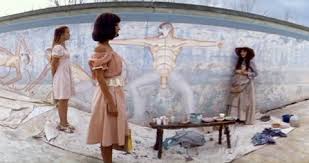
In 1977, the late Texas-born director, Robert Altman (1925-2006) had a dream. It involved three women living in a desert resort community, somewhere in California. The next morning, with the help of the screenwriter, Pat Resnick, Altman began sketching his film, which remains his most personal and among the more disturbing produced during Hollywood's late to mid-seventies golden age. Starring three performers from Texas--Shelley Duvall, Sissy Spacek, and Janice Rule-- 3 Women is as much about the double-self as Ingmar Bergman's brilliant Persona but with the cock-eyed charm of a M-G-M comedy starring Zasu Pitts. While Janice Rule paints enigmatic murals in a rundown apartment house for singles, Duvall-as-Millie-Lamorroreaux's new roommate, Pinky Rose (Spacek) starts to assume aspects of Millie's personality, including her awkwardness, and penchant for sleeping with Rule's husband. For her astonishing work -she improvised a great many of her monologues -Shelley Duvall won the Best Actress award at Cannes, while Spacek collected a Best Supporting Actress honor from the New York Film Critics.
Peggy and Fred in Hell

This a process-oriented work that combines archival footage and images Thornton shot and arranged herself, on both film and video, from 1984 to 2009. In the early 1980s, the artist began filming two children she met in Providence, Rhode Island. They became the focus of her project - to show the last two beings, a pre-adolescent brother and sister, on Earth. Inundated by media and natural devastation, Peggy and Fred traverse a post-apocalyptic universe where they can only reflect one another, and the ruin of the world. (Part of the story Thornton means to tell here through metaphor is her own history of duality: How to resolve the image of her father, a gentle man, with the fact that he was a scientist who worked on developing the Atom bomb). Combining bright lights, pictures and sound from television, as well as pre-sound images from documentary nature films, this extraordinary document is a near hallucinatory blend of "real" shots and manufactured scenes, or fiction. Taken together, they challenge our notion of what's true and what's false, what defines a boy and a girl, and how to cope in a world that won't let us alone, even as it disappears right before our very eyes.
Melvin: Portrait of a Player
Melvin is God’s gift to women. Unfortunately, he’s the only one who thinks so. To everyone else Melvin is a scoundrel, a serial cheater with a cash flow problem. Unexpectedly his childhood sweetheart comes back on the scene, but will Melvin remain faithful to her and end his roguish ways? Completely improvised, made in a mock documentary style—the film is essentially a series of short interviews—and shot in grainy black and white. It is fresh, fast, and full of raucous humour. Awards: Best Film and Best Actress, BFM Short Film Awards 2003
Morally Speaking
It’s Shella’s birthday, and her boyfriend Sam has everything planned: dinner and a movie, followed by a night of unbridled passion. Everything is going fine until they reach the bedroom—and Sam refuses to perform oral sex. He ends up on trial for men everywhere who refuse to go down on women, but expect women to go down on them. Morally Speaking is a sharply observed sex comedy, a smart and funny look at the hypocrisy that surrounds an often still-taboo subject. Awards: Best Film, Best Actress, Best Cinematography, BFM Short Film Awards 2005; Best Film, Buffalo Black & Asian Film Festival 2005; 2nd International Award, Images of Black Women Film Festival 2006
BLOG 2009
FRIDAY, SEPTEMBER 18, 2009
**Schedule update: Special Screenings**
Dear friends of the festival, we're happy to announce the following special screenings, which are not on our website or our printed materials. Please note that our 11.00 film on Saturday night has strong adult content. We hope you'll make a note of these screenings and come out to watch a few great films, perhaps even have a beer on us and meet a filmmaker or two.
TODAY Friday 18 September
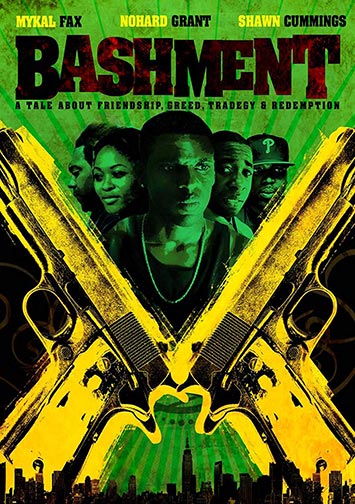
11.00 pm BASHMENT
A cautionary tale about friendship, greed and redemption, Bashment addresses the many complexities and pitfalls that Jamaican and Caribbean immigrants face on the quest for that all too often elusive 'American Dream’. When Cymbal (Mykal Fax) and his friends, Job (Steve McAlpin), Tubby (Shawn Cummings) and Rupert (Narada Campbell) linkup with Son-Son (Nohard Grant) an incorrigible bad boy who believes that choice is an illusion, and that the gun is the only thing that matters, they find themselves dealing with more drama than they are willing to take on.
MovieTowne
Saturday 19 September
11.00 pm BATTLE IN HEAVEN
A working-class man named Marcos and his wife kidnap a baby for ransom money, but it goes tragically wrong when the infant dies. In another world is Ana, the daughter of the general for whom he drives, who does sexual acts to any man for pleasure. Marcos confesses his guilt to her in his troubled search for relief, and then finds himself on his knees amid the multitude of believers moving slowly toward the Basilica in honor of the Lady of Guadalupe. --synopsis from imdb.com, check our FB site for the trailer.
MovieTowne
Director Carlos Reygadas present
Sunday 20 September
5.30 pm RUDO Y CURSI*

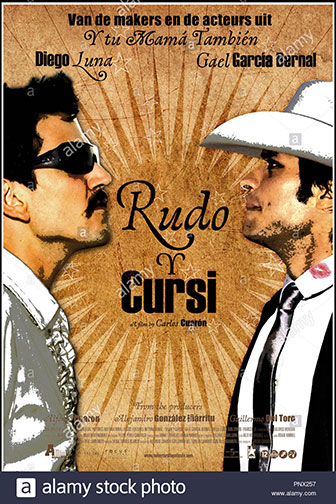
Two brothers from a rural Mexican village are playing in a local football match. Tato (Gael Garcia) is the star striker and Beto (Diego Luna) is the eccentric goalkeeper. A talent scout spots them and offers one of them the opportunity to go to the Capital and try out for one of the country’s big teams. They decide to settle it on a penalty shoot out. Tato scores the penalty against his brother and heads off to Mexico City where he has a slow start but finally makes it big and earns the nickname 'Cursi'. His brother soon follows and joins a rival team where he is given the nickname 'Rudo'. Cursi becomes a national hero and starts dating a famous model whilst his brother struggles with life in the City and misses his family back home. Soon things start falling apart for both brothers. Tato loses his goal-scoring touch and his woman, and his brother gets lured into a world of cocaine and gambling. In one fateful match the brothers come face to face. Cursi is threatened with demotion to Division 2 if he fails to score and Rudo must throw the match in order to settle his gambling debts. How will it end?
MovieTown
*This film is part of a special Focus on Mexico night. Vouchers for Corona beer courtesy the Mexican Embassy will be given out so you can have a beer and relax after Rudo and before the 8.00 pm screening ofSilent Light
See you there!
POSTED BY MELANIE AT
+++
Sans Souci and The Wind and the Water at MovieTowne
Filmmakers Francesca Hawkins of Trinidad and Tobago, left, and Vero Bollow of Panam
Films are made by collaboration. Sometimes, they are also made by a collective. That's the case with the two films that screened last night at MovieTowne, Sans Souci from Trinidad and Tobago, and The Wind and the Water, out of Panama.
In the typical filmmaking process, many people work together, each with a specially designated role: director, editor, production designer, what have you. When a film is made collectively, however, roles overlap; individuals do more than one task, and often tasks are shared. Sans Souci was made in this manner, as director Francesa Hawkinsexplained to the audience after the screening.
Sans Souci is a short film (but not a short short: the running time is almost 30 minutes) made by the current graduating class of the Film Programme of the University of the West Indies, a drama about a group of friends riven by differences in opinion around the 9/11 attacks, then brought back together under tragic circumstances. All of the action of the film takes place at a house at Sans Souci (a house owned by official TTFF artist Eddie Bowen), on Trinidad's north coast, the beautiful, isolated location becoming a crucible for the characters, their emotional experiences there contrasting sharply with the name of the place (sans souci, without a care or worry).
Shot in an intense three-and-a-half days, Sans Souci film had no written script but was improvised by the cast and crew working together. Much of what else is in the film was improvised as well: the visual motif involving a cobo, for example, was not predetermined, but worked into the film as shooting took place. And of course, as usually obtains on student productions, many of the tasks behind the camera were shared. The film's music score, however, was composed and performed by one person, Jason Dasent. As Francesca explained, Dasent, who is unsighted, composed the score by listening to the film's diegetic audio: the dialogue of the characters, the sound effects and the ambient sound--the wind, the crashing waves.
The Wind and the Water, a feature-length narrative film, was also made by a collective, but under rather different circumstances. It was made by Vero Bollow with the Igar Yala Collective, which comprises mainly young people (working with their elders) from the indigenous Kuna tribe of Panama. The film tells two stories. One is of the Kuna people's engagement with the outiside world, their struggles with maintaining tradition while also seeking to embrace modernity. The film is also the story of Machi and Rosy, two young people from the Kuna tribe. Their stories are contrasting ones: Machi, raised among his people on a group of islands, goes to Panama City to attend school and see what, if anything, life holds for him there; Rosy, born and raised in Panama City, goes to the islands for the first time when her grandfather passes away. Along the way Machi and Rosy cross paths, and a touching, subtly delineated friendship blossoms.
Working with technical experts from outside the tribe, the Kuna who helped make the film learned the process of filmmaking as the production went along. As an example of how this worked, Vero said that the young man who played the character of Machi also edited the scenes showing his character's childhood. (Incidentally, all of the main Kuna characters were played by non-professional actors, and in most cases gave wonderfully naturalistic and under-stated performances.) She also noted that the themes and issues dealt with in the film--development, tradition vs modernity, the lack of opportunity for the marginalisation of the indigenous peoples in Panama--reflect quite strongly the actual situation facing theses peoples in contemporary Panama.
Loath to take credit for much of the film herself, Vero almost incidentally noted that The Wind and the Water (Burwa dii ebo in Kuna) is the first feature film to come out of Panama. It is interesting to note that this film was made by a collective. Perhaps collective filmmaking--as opposed to standard collaborative filmmaking--could become a successful mode of filmmaking in other places where the film industry is also developing, not least of all here in Trinidad and Tobago.
Francesca Hawkins and Bruce Paddington, TTFF Director
Vero Bollow
Members of the audience taking in the post-screenings Q&A; session
POSTED BY JONATHAN
+++
THURSDAY, SEPTEMBER 17, 2009
Two Women . . . Sort of at StudioFilmClub
US film critic and New Yorker staff writer, Hilton Als, shares a laugh with StudioFilmClub co-founder, Peter Doig
One of the questions Jonathan and I have been sending out in our Q&As to directors is this: Can filmmaking change the world? The responses to this question have been varied. Yes. No. It already has. Driving home tonight I found my own answer: Perhaps filmmaking can't change the world, per se, but it can certainly alter one person's perception of it. Sometimes there is a film that is so singularly disturbing, beautiful, thought- and range-of-emotions-provoking that the universe around us, literally and figuratively, looks different after we see it. Perhaps you have a mental list of these films; I know I do. And tonight, I add one more, Peggy and Fred in Hell, which was screened as part of StudioFilmClub's second in a four-night programme for the trinidad+tobago film festival/09.
The first week of this year's StudioFilmClub programme is curated by US writer and film critic, Hilton Als, who arrived in Trinidad today and was present tonight for the second of four nights of film club screenings. In his pre-show chat he apolgised that he couldn't get here earlier, and then gave a brief explanation for his choice of films and his overarching focus on women--that, on screen, he finds women more interesting to look at than men. (Hilton's three SFC nights are called "Three Women," "Two Women . . . Sort of" and "One Woman.") He also pointed to a common thread in the films that he chose, that they all in some way address themes of transformation, identity, and repulsion.
First to be screened was the work of Kalup Linzy, an artist who spent a lot of time looking at soap operas with his grandmother who raised him. Linzy's three short films lived up to my expectations--they made up a raucous and hilarious ride of assorted Southern female characters (the filmmaker voices them all himself and plays a number of characters in drag).
For some present, the transition from Linzy's films to the screening of the visually dense, dark and disturbing Peggy and Fred in Hell was difficult. Hilton seemed to know that this would be the case--before the screening he urged patrons to get up during the film, go grab a drink, and come back, noting that he never sits through the entire work. I took his advice but was drawn quickly back to the film, which features a couple of children--the last surviving people on earth. The movie switches between archival footage of historical moments and natural disasters to scenes of Peggy and Fred moving through a vast world devoid of humans but filled with objects of a material and media-heavy age. Their behaviour is strange and hypnotic and varies throughout; in some scenes they appear to be playing house, in others they dance or sing for a stretch, in one they are engaged in a fist-fight. Director Leslie Thornton started making the film some 20 years ago but is supposedly now "finished." For the time being, at least.
After the screening, Hilton said of Peggy and Fred, "It's a difficult work, I know, but it's important to see it and other challenging works so that we can reorient our brains to the world around us."
Mission accomplished.
Next on the StudioFilmClub agenda is the screening of Kara Walker's short films, an hour-long programme that takes place this Friday, September 18, at 8.15 pm, with an after-party to follow. Admission is free.
- A still from Leslie Thornton's Peggy and Fred in Hell
- The crowd gathers around the bar. No surprise there!
- Studiofilmclub co-founder, Che Lovelace, before the screening
POSTED BY MELANIE
+++
Dalton Narine, director of Mas Man is interviewed in the lobby of MovieTowne earlier today, after the screening of his film.
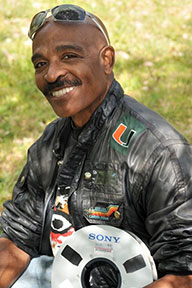
At 3.00 p.m. today, when most of Trinidad was busy picking up kids from school or impatiently eyeing the clock willing the end of the workday to arrive sooner, a decent group of roughly 60-something people gathered at MovieTowne to take in the screening of Mas Man--a film on the work of Peter Minshall. We speculate that the good attendance was prompted not only by people's desire to see and hear the notoriously mercurial Minshall caught on film, but also by director Dalton Narine, a guest of the festival who is in town and was present in the theatre for the screening of his film and to answer a few questions after.
But before we could take in Minshall and Narine and a whole host of recorded characters in between, we were treated to Suck Meh Soucouyant, Suck Meh--a short film by UWI graduate, Oyetayo Ojoade. After the screening, Bruce Paddington, festival director, gave Ojoade kudos for completing the film while still at UWI. Ojoade, in turn, acknowledged that there are elements of the film that he would still like to work on. He then addressed the audience directly: "If you give me the funding needed, I promise I'll finish the film."
Narine was up next and answered the first question on how long it took to make the film. "Five years," he answered, "Working with Minshall and unearthing all the facets of an artist who digs deep into his soul and pulls out the devils and angels." Narine then quipped that, with the material left over, he could write three novels and have some left over. He also spoke about the fact that getting archival footage of Minshall's bands proved to be a problem, as the government of T&T had "spirited away" 1st generational footage, which meant that he had to clean up 2nd generational footage which, of course, is less preferable.
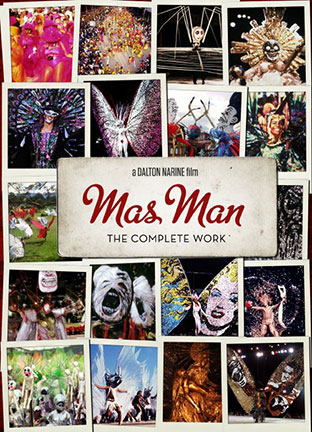
Another patron posed a question to Narine: "You took a risk in the film by addressing Minshall's race, why didn't you also take a risk and address his sexuality?" A buzz and shuffling in the crowd, and the Narine answered by saying that there are only 87 minutes of film and 26/27 bands to cover (all of which he couldn't cover due to time constraints) and that he didn't want to waste any valuable time on something that had little to nothing to do with the essence of Minshall as an artist.
And then the question that everyone was waiting for (whether they knew it or not): What was Minshall's reaction to the film? Narine informed us that, at first, people at the T&T Art Society warned him not to show Minshall the film, as that would be equal to the kiss of death. Narine ignored this advice and showed it to him anyway and Minshall took it well enough and had a few reasonable editorial suggestions and corrections. Narine made these but then, after the film was screened privately at NALIS earlier this year, there was "hell to pay," according to the director. He spoke of the difference in looking at work in an isolated environment rather than when you're surrounded by people; that the latter situation allows one to recognise his or her own shortcomings. Minshall hasn't spoken to him Since Carnival Sunday. "Is that why he's not here at the screening?" someone else asked. "I think so," Narine replied.
The last thing Narine spoke of was the need to document local individuals of merit and that there exist no films on Cipriani, Butler, Crawford, Williams, and a host of other, noteworthy people who have, in some way, contributed to our islands. Narine is pioneering in his documentation of Minshall, and he spoke of the need for fledgling filmmakers to pick up the mantle of telling our own stories.
If you missed Narine and Ojoade today, have no fear, they will be present at the second screening of Suck Meh Soucouyant and Mas Man, which takes place at MovieTowne Trinidad next Tuesday, September 22 at 3.00 p.m.
POSTED BY MELANIE
+++
The Filmmakers' Q&A;: Vero Bollow
Vero Bollow, director of The Wind and the Water, from Panama
Originally from the US, Vero Bollow lives and works in Panama. Vero is the director of The Wind and the Water, and she will be at the screening of the film tonight at 8.30 at MovieTowne.
What's the first film you remember seeing?
Amadeus.
What was the last film you saw?
The Visitor.
Which filmmaker do you admire most?
I admire the films more than the individual filmmakers, but if I had to point to one person in particular, I would mention George Lucas for having created something entirely on his own terms, yet that is very mainstream.
When was the last time you cried during a film?
I usually cry during films.
Who would play you in the film of your life?
Myself!
What's the best piece of filmmaking advice anyone's ever given you?
Finish your film.
What's the worst piece of filmmaking advice anyone's ever given you?
That you should wait until all the financing is there to believe in a project.
What is the most important thing you've learned about life from filmmaking?
Every story is valid.
What's the biggest misconception that people have about making films?
That documentaries are necessarily more "real" than fictional films.
Can filmmaking change the world?
It already has.
POSTED BY JONATHAN
+++
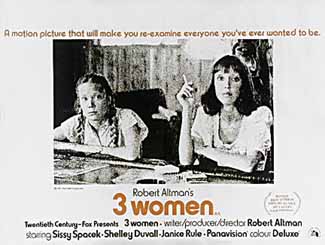
3 Women at StudioFilmClub
The late Robert Altman claimed that 3 Women came to him in a dream. It must have been a very strange dream, because the film is a strange, unsettling one. Loosely based on Ingmar Bergman's Persona, his classic study of two women in a tense, emotionally and psychologically vampiric relationship, 3 Women adds one more woman and a hazy, California-desert feel--as well as some off-kilter humour--to the mix. The film looks at the idea of multiple selves and the taking on of different personae, and as it progresses, each woman, at first with her own clearly defined individual identity, at different times assumes different aspects of the other women's characters until finally they become some less-than-holy female trinity, three persons in one.
At least, that's (partly) my take on it, from seeing the film for the first time at StudioFilmclub in Laventille last night, the first of four nights of screenings there as part of the TTFF09. The screenings are curated by US writer and critic Hilton Als, who will be at StudioFilmClub tonight for the second evening of screenings, which includes Leslie Thornton's experimental feature-length film, Peggy and Fred in Hell.
Last night's screening was not only the first night of screenings at SFC as part of the TTFF, but also the debut of a new HD projector, which, along with the recently-acquired cinema speakers (one from an old cinema in Trinidad, another from a cinema in Germany) and a Blu-Ray DVD player, will take the audio-visual experience at StudioFilmClub--which has been showing a mix of mainstream and independent, English and non-English language films for some five years now--to an exciting new level.
Also fairly new at SFC is the stand-alone bar area, where patrons last night limed before and after the film screening.
POSTED BY JONATHAN
+++
WEDNESDAY, SEPTEMBER 16, 2009
Ida Does at the TTFF
Ida Does interacts with students of the Film Programme at the University of the West IndiesI ended my last blog post by saying that it was time for the real business of the Film Festival, the film-watching, to begin. I begin this post, however, not by discussing a film screening, but a lecture. This morning, Surinamese filmmaker Ida Does, director of the moving biographical documentary Trefossa, got a chance to interact with students of the Film Programme at the University of the West Indies at St Augustine.
Ida met with second-year students of the BA in Film Programme, showing her film and discussing with them the art of documentary filmmaking. Among the issues that came up was the importance of access by filmmakers to archive material. In Ida's case, for her film about the late Surinamese poet Trefossa (Henri de Ziel), much film material from Suriname's history was available to her from archives in the Netherlands. The UWI students spoke of the lack of similar material here in Trinidad and Tobago, and in cases where the material did exist, the difficulty in getting access. This led to a discussion about the need for filmmakers in such situations to become creative and the different methods documentarians can employ to achieve their goals.
Other issues discussed included effective ways to conduct documentary interviews, and the importance of having a crew--in particular a cinematographer--who not only knows completely what he or she is doing but is also sympathetic towards your vision.
After the talk about Trefossa in the morning, in the afternoon was the screening of Trefossa at MovieTowne. Among the audience were persons from the Dutch embassy, and at least one person from Suriname, who spoke movingly about how this intimate portrait of the man who popularised Suriname's nation-language (Sranan) and who helped inspire a generation to seek srefidensi (the Sranan word for independence, coined by Trefossa), had touched her. It was then left to Film Festival Director Bruce Paddington to note that were it not for the Festival, we here in T&T; would perhaps never have heard about Trefossa and his exploits.
Trefossa screens again at the TTFF on the 27th at 1pm at MovieTowne.
workshops
The Art of Cinematography
This workshop aims to make participants familiar with the art and technique of cinematography so that they learn the theory and practice of image making, not only as a technical skill but also as an integral part of the filmmaker’s vision. Importance will be placed on the understanding of core elements of cinematography such as composition and how to tell a story by paying proper attention to source, quality, and direction of light. This workshop is geared towards intermediate level cinematographers but beginners are also welcomed. Facilitated by award-winning director of photography, Sean Bobbit whose filmography includes Hunger, The Situation, United 93, The Lawless Heart, Wonderland, Cargo, Mrs Ratcliffe’s Revolution, See How They Run and The Baker.
Saturday, 19 September / 9am – 4pm / $350
Alternative Marketing in the Digital Era
Traditional means of marketing are rapidly changing. With theatrical distribution becoming less attainable and profitable, many filmmakers are turning to self-generated marketing techniques that rely heavily on new technologies in order to reach audiences. This workshop, facilitated by Christopher Meir, Lecturer in Film at UWI, St. Augustine, and Georgia Poppelwell, Managing Director for Global Voices, and Frances Anne Solomon, independent filmmaker and founder of Caribbean Tales Film Festival, will explore how current models of marketing are keeping pace with emerging technologies and how you can operate within this new paradigm. Come to learn about the challenges and opportunities of new marketing opportunities.
Saturday, 19 September /1pm – 4pm/ $250
The Documentary: In Theory and Practice
Documentary filmmaking is coming centre stage as we discover the many stories to be told about real people and real issues. In this workshop, participants will consider the contemporary status of the documentary and explore documentary as biography, and as a means of social and political action, from the angle of directing to a bent on producing. Through a series of presentations by esteemed panelists this interactive session will provide extensive opportunity for participants to gain an insight into the genre of non-fiction filmmaking and its challenges.
Presenters: Award-winning UK filmmaker, Adam Low; documentary producer for Maysles Films and other independent production companies, Tanja Meding; up and coming French Caribbean documentarian Juan Gelas; UK-based, Jamaican-born journalist, documentary filmmaker and founder of the riceNpeas film production company, Ishmahil Blagrove Jr.
Saturday, 26 September / 9am – 12pm / $250
The Use and Misuse of Archive Film Footage
Like every area of filmmaking, using archive material is a skill in itself. For the documentary maker it is a vital one. Award-winning documentary filmmaker, Adam Low, whose film subjects include Akira Kurosowa, VS Naipaul, Satyatjit Ray and Salvador Dali, will lead this workshop on the film literacy skills needed in understanding and interpreting meaning from archive footage. He will explore the use of archival material, the aesthetics of appropriation and the transfer of cinematic language to digital forms.
Saturday, 26 September / 1– 4pm / $250
filmmaker's panel
Two 90 minute filmmaker panels gives filmmakers and film lovers a chance to hear directly from select local and visiting industry professionals about some of the realities of independent filmmaking in all its genres and to interact with them in person. Check our blog for a list of participating filmmakers and topics.Friday, 18th & 25th September
11am - 12:30pm / Free
No registration required
Chaud Restaurant,
Queens Park Savannah, POS